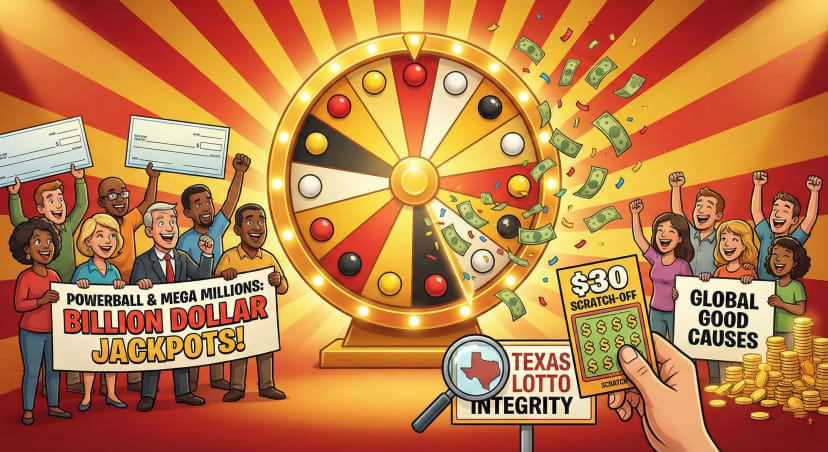
Powerball Jackpot Nears $1 Billion Milestone


Recommended casinos
Key Takeaways
- Massive jackpots in Powerball and Mega Millions drive record ticket sales across North America, signaling robust holiday season demand.
- Colorado Lottery pioneers online sales and credit card payments, potentially reshaping retail dynamics in regulated markets.
- IGT's rebranding to Brightstar Lottery underscores corporate restructuring to prioritize digital lottery innovations globally.
- European regulators intensify focus on National Lottery compliance amid sales limit impacts on society lotteries.
- International expansions, like The Lotter Australia's mobile app, expand access to global draws for emerging markets.
Powerball Jackpot Surges Toward Record
The Powerball multi-state lottery game has captured widespread attention as its jackpot climbs toward $1 billion, marking one of the largest prizes in U.S. history. Following a drawing on December 6, 2025, with no top-prize winner, the estimated annuity for the next draw on December 8 stands at $875 million, with a cash option exceeding $400 million. This escalation follows 40 consecutive drawings without a jackpot hit, fueling ticket sales surges in 45 participating states. The phenomenon highlights seasonal trends where escalating prizes boost participation rates by up to 20%, according to historical data from the Multi-State Lottery Association.
This development matters for the industry as it exemplifies how rollover jackpots sustain revenue streams for state-funded programs, contributing billions annually to education and public services. However, it also amplifies calls for responsible gaming measures amid heightened player engagement. Retailers report increased foot traffic, though digital sales channels in states like Michigan demonstrate that online options can complement rather than cannibalize in-person purchases.
Colorado Approves Digital Lottery Access
Colorado's lottery commission has greenlit rule changes enabling online ticket purchases and credit card payments, a pivotal shift set to launch in early 2026. Approved on November 26, 2025, the updates address long-standing player demands for convenience while addressing retailer concerns over potential sales displacement. Data from peer states like Michigan, where retail sales rose 8% post-online rollout, informed the decision, countering legislative worries about problem gambling escalation.
The move positions Colorado as a leader in lottery modernization, potentially increasing overall participation by 10-15% based on comparable implementations. It aligns with broader U.S. trends toward hybrid retail-digital models, enhancing revenue for good causes like conservation efforts. Regulators emphasized built-in safeguards, including age verification and spending limits, to maintain integrity.
IGT Rebrands as Brightstar Lottery
International Game Technology (IGT) announced its rebranding to Brightstar Lottery, effective post the July 2025 divestiture of its gaming and digital segments to Apollo-backed Voyager Parent. The transition refocuses the entity on lottery operations, serving 90 lotteries across six continents and 26 U.S. jurisdictions. CEO Vince Sadusky highlighted the shift toward cloud-based innovations and responsible gaming amid digital adoption.
This restructuring is significant for global operators, as it streamlines supply chains for video lottery terminals and central systems, like the recent Intelligen EVO deployment with Canada's Atlantic Lottery. By concentrating on lottery tech, Brightstar aims to counter market fragmentation, projecting sustained growth in emerging regions like the UAE, where it secured a supplier license. The move echoes Scientific Games' 2022 split, fostering specialized advancements in player protection and data analytics.
Italian Lotto Concession Sparks Bidding War
Italy's Lotto concession tender, valued at €4.3 billion over nine years, has narrowed to bids from IGT and Sisal, with the process advancing toward a potential €1.5 billion auction close. Launched in March 2025 by the Ministry of Economy and Finance, the competition emphasizes technological upgrades and player protection, aligning with IGT's recent responsible gaming certification. Sisal, leveraging its Super Enalotto expertise, eyes expansion despite lacking prior Lotto operations.
The contest highlights Europe's push for competitive licensing to drive efficiency and innovation, amid rising digital stakes. A winner could redefine market dynamics, boosting contributions to social funds while integrating advanced fraud detection. Analysts anticipate the outcome by mid-2026, influencing similar tenders across the continent.